
Space for Prayer
Devotional images to aid prayer

Our Lady of the Hermitage, University of Navarra 360º

San Fermín

Our Lady of the Hermitage, University of Navarra

Our Lady of Lourdes
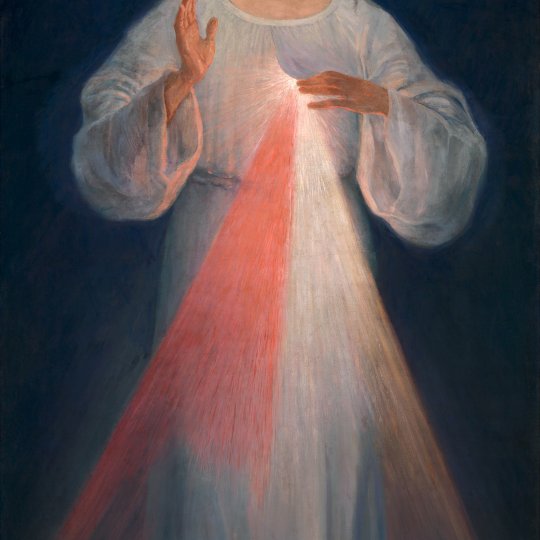
Image of Divine Mercy

Torreciudad Crucifix

Virgen del Pilar

Virgen de Guadalupe, México

Basílica de la Natividad, Belén

Santa Casa de Loreto
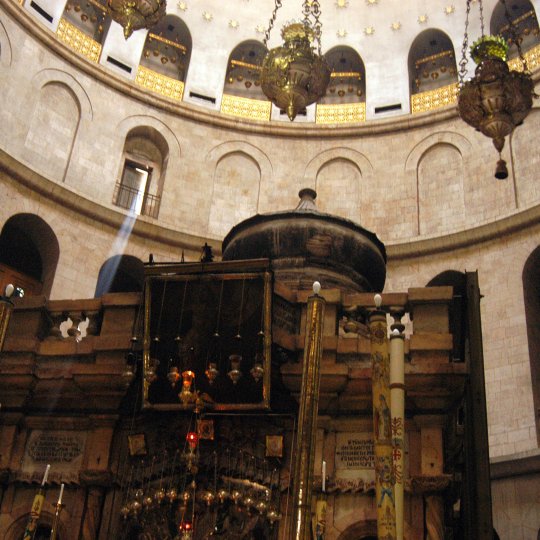
Santo Sepulcro

Sinagoga de Cafarnaúb - Kfar Nahum


THE MOTHER OF BEAUTIFUL LOVE, HEART OF OUR ALMA MATER
Since its inception, the University has been known as the Alma Mater. This expression stems from classical tradition, as the Romans attributed to deities of abundance, such as Ceres or Cybele, the ability to nourish human beings. Christianity later adopted this expression to refer to the Virgin Mary as the nurturing mother – in a spiritual sense – of all humanity. The convergence of nourishment for the body and sustenance for the soul took place towards the end of the 11th century, when the first institution of higher education in the Western world – that is, the first university – was founded.
As Francisco Ponz reminds us, ever since the foundation stone of the Campus was laid on 25 October 1960, the founder of the University of Navarra, Josemaría Escrivá de Balaguer, “revealed a long-held intention of his: he wished one of the buildings—modest yet of singular significance—to be a chapel in which an image of Our Lady would be venerated; this was his gift so that she might preside over the entire life of the University and watch over the Christian formation and spiritual well-being of lecturers, students and staff. The presence of that image would be an excellent means of fostering Marian devotion; it would make it easier to turn to the Blessed Virgin Mary to entrust to her care all the work of the University, personal problems and needs, as well as all noble affections; and it would be the place to go to give thanks for her help’ (Ponz, 2010, 386).
Thus, the Mother of Beautiful Love can be regarded as the heart of our Alma Mater, amongst other reasons, because she leads us to develop our very essence; she is the soul and the mother who knows her children one by one. With great insight, Cardinal John Henry Newman reminds us that a true university “is neither a refuge, nor a mint, nor a factory” (Newman, 2011, VI, 159), but a endeavour in which human intelligence embraces the highest wisdom. Perhaps that is why Our Mother embraces her Son, a Child who once again teaches the doctors the way of truth, the truth of life, the life that becomes a path amidst the struggles of each day…
The Child Jesus stands atop a pile of thick books, containing the discoveries of the sciences—human, natural and supernatural—which form the foundation of the University’s wisdom. Whilst blessing us with his right hand, his left hand shows us a beautiful rose which, no doubt, gives off an incomparable fragrance, but on whose stem thorns grow—that rose in which the Passion and the Glory are foreshadowed.
So that there may be no doubt whatsoever, when we contemplate the Virgin in the chapel, we not only come to enjoy an experience of beauty, thanks to the delicate craftsmanship of the master Sciancalepore, but we also arrive at a distinctive realisation: a university founded upon the heart of his Mother, upon the Love that is Alma Mater, is not a factory churning out qualifications, nor an assembly line for automaton citizens who replace cogs in a social machine, nor a company dedicated to optimising its financial results, nor, far from it, a contraption of artificial intelligence… No. The University presided over by the Mother of Beautiful Love is the fruit of effort and natural intelligence; we are children of our Alma Mater.
Now we might ask ourselves: what is that soul which makes our university a Mater, Mater et magistra…? Not long ago, I heard a colleague and friend, Dr Carlos Soria, Professor Emeritus at the University of Navarra, answer this question, and his reply was surprising: ‘Even before the University’s inception, its founder entrusted this scientific and academic endeavour to the maternal intercession of Our Lady, on whom he has always relied. The chapel of the Mother of Beautiful Love, overlooking the campus from on high, presides over the entire life of the University, and the Virgin watches over the spiritual health of lecturers, students and staff. Students will learn from the Mother of Beautiful Love the nobility of love, including human love. It gives me great joy,” said St Josemaría, “that many holy homes will emerge from this University” (Soria, 2024, 90).
This sculpture, which we have been able to contemplate since 8 December 1966—blessed by Pope Paul VI in Rome and donated by a secular priest—reminds us that university life, like everyday life when one strives to act rightly, consists, to a large extent, in broadening one’s horizons. All those who pass by it turn to look, and in a fruitful silence place themselves under her protection; they ask her with confidence – sometimes for something small and insignificant, but at other times for great things for small lives… – yet they all smile at her.
The University is the very proof of the fruitfulness of truth, and the chapel of the Mother of Beautiful Love is a special place for the sincere and simple search for truth, for the whole truth, for the whole truth of our being. Our Mother always gives us a knowing wink; she is attentive and by our side, as if to remind us that the task of university students is to skilfully take up the challenge of becoming a new kind of intellectual—one with the ability to interpret social circumstances, with the generosity to foster culture, and with the clarity to offer concrete and realistic solutions to the complex issues of our time.
The Mother of Beautiful Love is Beauty set in stone… Natural beauty – and supernatural beauty too – requires a moment of contemplation in the midst of the world, an act of self-surrender and acceptance: the surrender of our talents, the acceptance of those lights that come from on high; and all this is possible when we look into the eyes of the Virgin and her Son, as we pass by the wayside shrine – in a hurry – at the start of our working day, or – very tired – at the end of it.
The University is the home of truth for the sake of goodness; it is the home of goodness committed to truth… but it is also the home in which beauty reveals itself as true goodness, as the true good. Truth, Goodness and Beauty are the radiance of the Beautiful Love that God has for us, and which, in our University, shines forth in white marble, as if wishing to convey, without intermediaries, His Light…
Ricardo Piñero Moral is Professor of Aesthetics and Theory of the Arts. Director of the Core Curriculum Institute at the University of Navarra.
NEWMAN, John Henry, 2011, Discourses on the Purpose and Nature of University Education, EUNSA, Pamplona.
PONZ PIEDRAFITA, Francisco, 2010, “50 Years of the Chapel on the University of Navarra Campus”, in Scripta de María, vol. VII, no. 7, pp. 383–399.
SORIA SAIZ, Carlos, 2024, Moments in the Life of the Founder of the University of Navarra, EUNSA, Pamplona.
MUSIC: Virgen de Amor – Tuna de Acción Católica
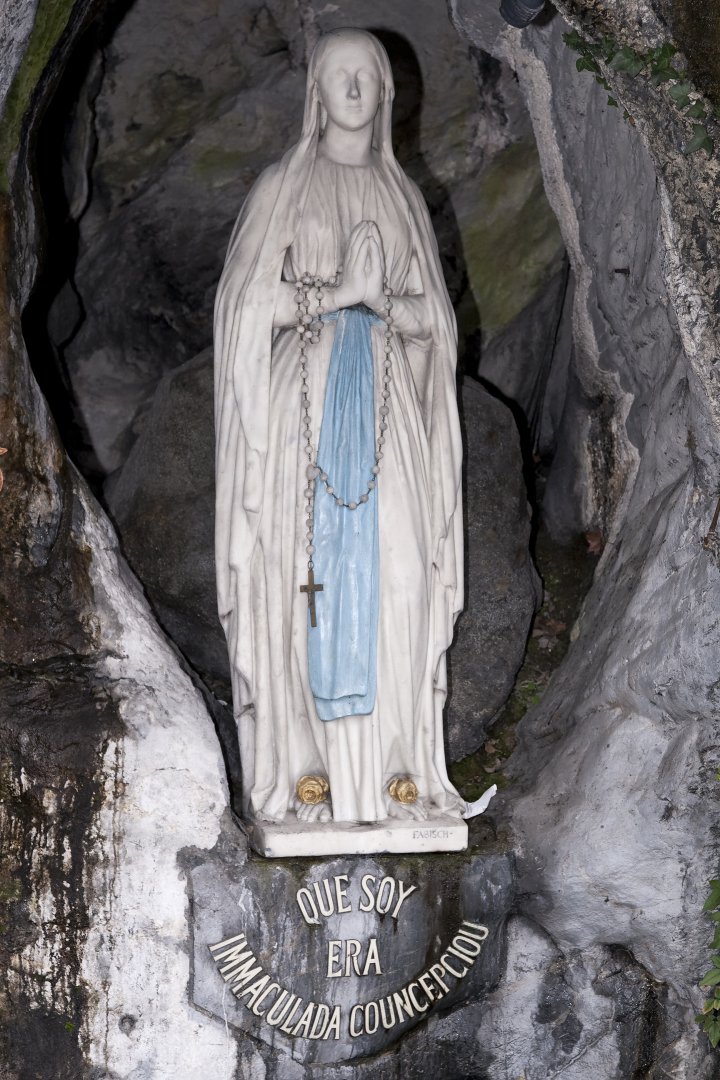
"And it seems as though the Blessed Virgin had wished to confirm in a miraculous manner the judgement which the Vicar of her divine Son on earth, with the approval of the whole Church, had pronounced. For not even four years had passed when, near a village in France, in the foothills of the Pyrenees, the Blessed Virgin, dressed in white, covered with a snow-white mantle and her waist girded with a blue sash, appeared, with a youthful and affable countenance, in the grotto of Massabielle to an innocent and simple little girl; and when the girl insisted on knowing the name of the One who had deigned to appear to her, she, with a gentle smile and raising her eyes to heaven, replied: ‘I am the Immaculate Conception’. This was, naturally, well understood by the faithful, who, in almost innumerable crowds, flocking from all quarters on devout pilgrimages to the grotto of Lourdes, rekindled their faith, strengthened their piety and strove to conform their lives to the precepts of Christ (…)” Pius XII, Encyclical Letter Fulgens Corona, nos. 3–4
Bernadette Soubirous, a poor, illiterate fourteen-year-old girl, had eighteen encounters with the Virgin Mary in the grotto of Massabielle, to the west of Lourdes, between 11 February and 16 July 1858.
The Virgin asked her to do penance and pray for the conversion of sinners. And to test the girl’s faith, she asked her to drink water at the foot of a cave, where there was nothing but damp earth. Bernadette trusted her, dug into the earth in search of water, smeared her face with mud, to the astonishment of the hundreds of people present… and from there a spring emerged, from which one hundred thousand litres of the purest water flow uninterruptedly every day: water that has healed a multitude of the sick, who came to the feet of the Virgin to ask for her maternal intercession.
The Virgin also asked, as she had done at Guadalupe and would do half a century later at Fátima, that a chapel be built there, where her children might meet her and, together with her, her Son Jesus.
In response to Bernadette’s repeated requests that the beautiful Lady reveal her name, on 25 March 1858 (during her sixteenth apparition) the Lady said to her: “I am the Immaculate Conception” (“I am the Immaculate Conception”). The Catholic dogma of the Immaculate Conception of the Virgin Mary had been solemnly proclaimed on 8 December 1854, three years earlier. The expression was unfamiliar to Bernadette and, at first, caused some confusion, both for Father Peyramale himself – the parish priest of Lourdes – and for other ecclesiastical and civil authorities. However, Bernadette maintained a consistently calm demeanour throughout all the rigorous interrogations she underwent, without altering her account or her attitude, nor claiming to possess any knowledge beyond what she had already stated regarding the visions she had described.
The final interrogation before the ecclesiastical commission, chaired by the Bishop of Tarbes, Laurence, took place on 1 December 1860. The elderly bishop was moved to tears when Bernadette repeated the gesture and the words that the Virgin had spoken on 25 March 1858: ‘I am the Immaculate Conception’. On 18 January 1862, Laurence published a pastoral letter in which he declared that “the Immaculate Mother of God had truly appeared to Bernadette”. In that same year, Pope Pius IX authorised the local bishop to permit the veneration of the Virgin Mary at Lourdes. Since then, successive popes have supported devotion to the shrine and pilgrimages there in various ways. Pope Pius X extended the celebration of the memorial to the whole Church. On 9 November 1907, Pope Pius X introduced an indulgence of 300 days for each invocation of Our Lady of Lourdes. Pius XI definitively confirmed the feast of Our Lady of Lourdes by beatifying Bernadette on 6 June 1925, and canonising her on the Solemnity of the Immaculate Conception during the Holy Year of Redemption, on 8 December 1933. In 1937, Pius XI himself appointed Eugenio Pacelli as papal delegate to visit and personally venerate the Virgin in Lourdes. On 8 September 1953, to mark the centenary of the dogma of the Immaculate Conception, Pope Pius XII decreed, in his Encyclical Letter Fulgens Corona, the celebration of a Marian Year – the first in the history of the Catholic Church – throughout the world.
The Virgin’s message at Lourdes is the same one she has been repeating ever since her time on earth: that we should go to Jesus; indeed, that we should let her lead us to Jesus. Prayer, penance and the recitation of the Holy Rosary will be the path to Jesus and to leading many to that encounter with him. The history of Lourdes is a clear example of her maternal intercession.
During the final apparition—the last time Bernadette and Our Lady saw one another on earth—the girl was unable to approach the grotto, where Mary was, because of the crowd that had gathered; they simply looked at one another: that was enough. Bernadette knew she would never see her again—until they met in Heaven. Our Lady’s message and her maternal hand accompanied her all the way to Heaven. Now it is our turn to walk that same path, with the help of our Mother Mary.
Music: Prima luce – Immaculate Mary

The image of the Divine Mercy depicts the vision of Jesus Christ that Saint Faustina Kowalska had on 22 February 1931. The saint writes in her diary: ‘At dusk, whilst in my cell, I saw the Lord Jesus dressed in a white robe. He had one hand raised in blessing, and with the other He was touching the robe over His chest. From the opening of the robe at His chest came two great rays: one red and the other pale.’
The rays have symbolic meaning: the red one represents the blood of Jesus and the pale one the water that justifies souls. Jesus Christ explained to the visionary: ‘The rays of light in the image represent the Blood and the Water, which flowed from the deepest recesses of My mercy when My agonising Heart was pierced by a lance on the Cross.’ Consequently, the entire image is a symbol of the charity, the forgiveness and the love of a merciful God. Saint Faustina received instructions from Jesus Christ to have a painting made, depicting the vision she had had, and to include in it the phrase: ‘Jesus, I trust in You’. Jesus said to her: ‘Through this image I shall fill souls with graces. I promise you that the soul that venerates this image shall not perish’. The veneration of the image of Divine Mercy forms part of the message received by Saint Faustina: ‘to implore God’s mercy for the whole world’.
The mystery of Divine Mercy is deeply connected with the Sacred Heart of Jesus and its iconography, expanding upon and further developing it. The tradition of depicting the Sacred Heart reached its peak in the first half of the 20th century, coinciding with the height of this devotion. Indeed, on 1 July 1934, just as the painting of the Merciful Jesus was being completed, the whole of Lithuania was solemnly consecrated to the Sacred Heart of Jesus.
Blessed Father Michael Sopocko, Saint Faustina’s confessor, who strove earnestly to understand her revelations and assess their authenticity, explained the meaning of the rays: ‘They are the symbol of the Church (...) This blood and this water flow ceaselessly within the Church as graces that purify the soul through the sacraments of Baptism and Penance, and give it life through the sacrament of the Eucharist, the Holy Spirit—sent by the Saviour—being the source of these graces.”
The original painting of the Divine Mercy is the work of Eugeniusz Kazimirowski. He painted it in 1934, following Sister Faustina’s instructions. The final result did not satisfy Kowalska, who later wrote that Jesus had told her it was not so important for the image to be beautiful, as the true beauty would be the blessing He would bestow upon people through the painting. In 1986, the painting underwent restoration, which significantly altered its appearance. Subsequently, in 2017, the image was refurbished and restored to its original form. Owing to the great devotion it inspired, many artistic interpretations of this image have been created, the most widely known being the one painted by Adolf Hyła, known as the Image of Divine Mercy of Kraków; however, the original painting is the one reproduced here, and it is located in Vilnius (Lithuania).
Pope Saint John Paul II established ‘Divine Mercy Sunday’ on the second Sunday of Easter and included it in the universal Roman Calendar. The image of Divine Mercy is usually carried in procession on Divine Mercy Sunday and placed in a prominent spot in the church so that it may be venerated by the faithful.

No me mueve, mi Dios, para quererte
el cielo que me tienes prometido,
ni me mueve el infierno tan temido
para dejar por eso de ofenderte.
Tú me mueves, Señor, muéveme el verte
clavado en una cruz y escarnecido;
muéveme ver tu cuerpo tan herido,
muévenme tus afrentas y tu muerte.
Muéveme, en fin, tu amor, y en tal manera
que aunque no hubiera cielo, yo te amara,
y aunque no hubiera infierno, te temiera.
No me tienes que dar porque te quiera,
pues aunque lo que espero no esperara,
lo mismo que te quiero te quisiera”.
Anónimo
La Virgen del Pilar
1. La aparición
La devoción a la Virgen del Pilar es una de las tradiciones marianas más antiguas del cristianismo y un pilar fundamental de la identidad de Zaragoza, Aragón y del mundo hispánico. A diferencia de la mayoría de las apariciones marianas, la tradición del Pilar destaca porque se considera la única aparición mariana mientras la Virgen María aún vivía en Jerusalén cuando se manifestó al Apóstol Santiago.
En efecto, según una tradición custodiada desde la Antigüedad, el 2 de enero del año 40 d.C., el Apóstol Santiago el Mayor se encontraba predicando el Evangelio a orillas del río Ebro en Cæsaraugusta (actual Zaragoza). Descorazonado por la dificultad de convertir a los pobladores paganos, recibió la visita de la Virgen María rodeada de ángeles que portaban una columna de jaspe de 1,77 metros de altura. En aquel momento el Apóstol estaba acompañado por siete discípulos.
La Virgen le pidió que edificase allí una capilla en su honor, prometiendo que "permanecerá este sitio hasta el fin de los tiempos para que la virtud de Dios obre maravillas y prodigios por mi intercesión".
2. El Templo
Este hecho dio origen al primer templo mariano de la Cristiandad. En ese lugar se construyó una pequeña edificación, con el altar dispuesto en torno a la columna, que con el tiempo se fue ampliando llegando a convertirse en una ermita paleocristiana/mozárabe.
A principios del siglo XII, en el año 1118, el rey Alfonso I el Batallador reconquista la ciudad y sustituye esa ermita por un templo románico cuyas obras no finalizaron hasta el siglo XIII, de cuyo aspecto da idea un tímpano que se conserva integrado en la fachada actual.
Sin embargo, aún no había transcurrido un siglo desde la finalización de la obra románica, cuando se decide iniciar la construcción de un nuevo edificio, en estilo gótico-mudéjar, que se terminó en el año 1518.
La colegiata mudéjar incluía un lujoso coro y el retablo del altar mayor, encargado a Damián Forment, que se conservan en la actual concatedral.
A finales del siglo XVII se plantea de nuevo la necesidad de erigir una nueva basílica de grandes proporciones de estilo barroco, que se convertiría en la segunda catedral de la ciudad, junto con La Seo. El proyecto, iniciado por José Felipe de Busiñac y Felipe Sánchez y revisado por Francisco de Herrera el Mozo, comenzó a realizarse en 1681. Más adelante, en 1750, Ventura Rodríguez se encargaría de revisar el diseño completo e introducir cambios que lo acercarían al gusto neoclásico. Obra maestra de su labor fue la concepción de una nueva capilla para la Virgen, consistente en un templete de gran suntuosidad que integra caracteres barrocos, rococó y neoclásicos.
Finalmente, en los siglos XIX y XX, se erigieron las cúpulas y linternas faltantes y las altas torres de los ángulos que, en 1961, darían a la Basílica del Pilar el aspecto con el que hoy se conoce.
3. La imagen
Una antigua tradición piadosa afirma que la columna vino acompañada de una pequeña talla de la Virgen. Sea cierto o no lo sea, la imagen que hoy veneran millones de fieles tiene un origen posterior muy concreto.
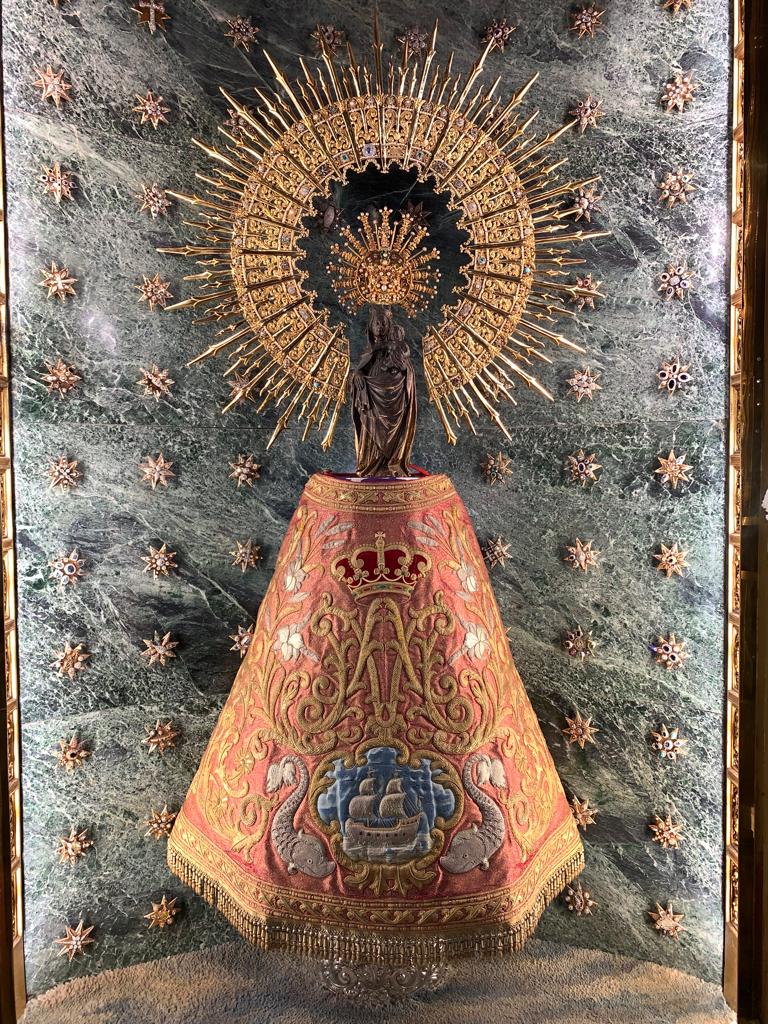
A mediados del siglo XV, un devastador incendio destruyó el retablo y la antigua imagen que custodiaba la Santa Capilla. Entonces, se encargó la efigie actual. Se trata de una obra de la primera mitad del siglo XV (hacia 1435) atribuida al escultor aragonés Juan de la Huerta. Es una imagen de Nuestra Señora de 36 centímetros de altura, tallada en madera de estilo gótico tardío europeo. Representa a María de pié, coronada como Reina y Madre, cubierta con un vestido abotonado de la época gótica, sosteniendo en su brazo izquierdo a su Hijo, quien tiene delicadamente en sus manos un pájaro. Esta talla de la Virgen está colocada encima de la columna de jaspe traída por los ángeles. Actualmente la columna está recubierta con una lámina de plata repujada, para protegerla de la erosión.
Lo que llama la atención en el templo del Pilar es que el manto de la Virgen cubre a la columna de jaspe, no a la imagen de la Virgen. Su simbología es clara: La columna representa la firmeza de la fe y la perseverancia cristiana. María es nuestra fortaleza: es el refugio de los pecadores, el auxilio de los cristianos, es el ancla de nuestra salvación. La presencia de María expresa el consuelo maternal y la cercanía de la Virgen en los momentos difíciles.
4. La devoción
Aunque la tradición sitúa el origen del Pilar en el siglo I, debemos avanzar varios siglos para encontrar testimonios históricos sobre la existencia de un lugar de culto en este emplazamiento. Es en el siglo IX, estando Zaragoza sometida a los musulmanes, cuando se encuentran las primeras referencias históricas acerca de una iglesia dedicada a la Virgen María muy venerada por la comunidad mozárabe.
Después de la conquista de Zaragoza por Alfonso I el Batallador el culto y la devoción a la Virgen del Pilar fue creciendo y en los siglos XII y XIII ese templo se convirtió en un lugar de peregrinación. De hecho existe un documento de finales del siglo XIII donde se menciona expresamente la advocación de Santa María del Pilar.
Zaragoza era una ciudad de importancia política, comercial y religiosa, y el santuario recibía fieles que acudían a rezar ante la columna venerada. La afluencia de peregrinos y las donaciones hicieron necesario reparar y ampliar sucesivamente el templo. La devoción no permaneció limitada a un pequeño grupo de fieles, sino que se convirtió en una expresión colectiva de la religiosidad zaragozana. Comienzan a formalizarse las primeras cofradías y peregrinaciones regionales. La devoción a Santa María se extendió por la Corona de Aragón y otros territorios de la península.
A partir del siglo XVI, el culto a la Virgen del Pilar se consolidó de manera notable. Reyes, autoridades eclesiásticas, instituciones y ciudadanos contribuyeron al enriquecimiento del santuario. Por ejemplo, Felipe II a finales del siglo XVI donó dos ángeles de plata que actualmente forman parte del conjunto artístico de la Capilla de la Virgen.
Desde un punto de vista religioso a principios del siglo XVII se documenta la celebración del 12 de octubre como la fiesta de la Virgen del Pilar y a finales de siglo el templo del Pilar recibió el título de Catedral.
Como ya se ha mostrado anteriormente, el templo medieval empezó a resultar insuficiente para acoger a los fieles. Por ello, en el siglo XVII se impulsó la construcción de un templo mucho más monumental, de acuerdo con el estilo y la sensibilidad religiosa del Barroco.
Podemos afirmar que la devoción a la Virgen del Pilar se convirtió en un referente religioso para distintas comunidades españolas. En muchas ciudades y pueblos hay templos y altares dedicados a esta advocación mariana. En la actualidad se puede afirmar que la devoción a la Virgen del Pilar es una de las devociones más arraigadas en toda España y en Hispanoamérica. Al coincidir la fiesta de la Virgen del Pilar con el día del descubrimiento de América por Cristóbal Colón, los numerosos emigrantes llevaron su devoción a América y a otros lugares del mundo. De hecho, el papa Pío XII en el año 1948 nombró a la Virgen del Pilar como Patrona de la Hispanidad.
El Pilar es uno de los santuarios marianos del mundo que recibe más peregrinos; y es tradicional la costumbre de rezar esta oración a la Virgen del Pilar: «Bendita y alabada sea la hora en que María Santísima vino en carne mortal a Zaragoza. Por siempre sea bendita y alabada».
Transcribimos la letra del Himno a la Virgen del Pilar, que se escucha en esta página web:
"Virgen Santa, Madre mía,
luz hermosa, claro día
que la tierra aragonesa
te dignaste visitar.
Este pueblo que te adora,
de tu amor favor implora
y te aclama y te bendice
abrazado a tu Pilar.
Abrazado a tu Pilar,
abrazado a tu Pilar.
Pilar sagrado,
faro esplendente,
rico presente de caridad.
Pilar bendito, trono de gloria,
tú a la victoria nos llevarás.
Tú a la victoria nos llevarás.
Cantad, cantad
himnos de honor y de alabanza.
Cantad, cantad
a la Virgen del Pilar.
Cantad, cantad
a la Virgen del Pilar. "


